
Remove the roast from the refrigerator at least 2–3 hours before cooking. Allowing the meat to come to room temperature ensures even cooking throughout.
Pat Dry
Use paper towels to thoroughly dry the surface. Moisture prevents browning and crust formation.
Step 2: Season Generously
In a bowl, mix salt, pepper, garlic powder, rosemary, thyme, and minced garlic with olive oil or butter to form a paste.
Rub the mixture thoroughly over the entire roast, including the sides and ends. Don’t be shy—this large cut of meat requires ample seasoning.
For best results, season the roast 24 hours in advance and leave it uncovered in the refrigerator. This dry-brining technique enhances flavor and helps create a superior crust.
Step 3: The Perfect Roasting Method
There are two reliable methods: the traditional steady roast and the reverse sear. We’ll focus on the reverse sear for maximum juiciness and control.
Reverse Sear Method (Highly Recommended)
1. Preheat Oven to 250°F (120°C)
Place the roast bone-side down on a rack in a roasting pan.
2. Slow Roast
Cook until internal temperature reaches:
115°F for rare
120°F for medium-rare
125°F for medium
Use a meat thermometer inserted into the thickest part of the roast. This is essential for accuracy.
This step may take 3–4 hours depending on size.
3. Rest
Remove from oven and tent loosely with foil. Let rest for 30–45 minutes. During resting, internal temperature will rise about 5–10 degrees.
4. High-Heat Sear
Increase oven temperature to 500°F (260°C). Return roast to oven for 10–15 minutes until a dark golden crust forms.
This final blast of heat creates a beautifully caramelized exterior while preserving the juicy interior.
Internal Temperature Guide
Use this chart for doneness:
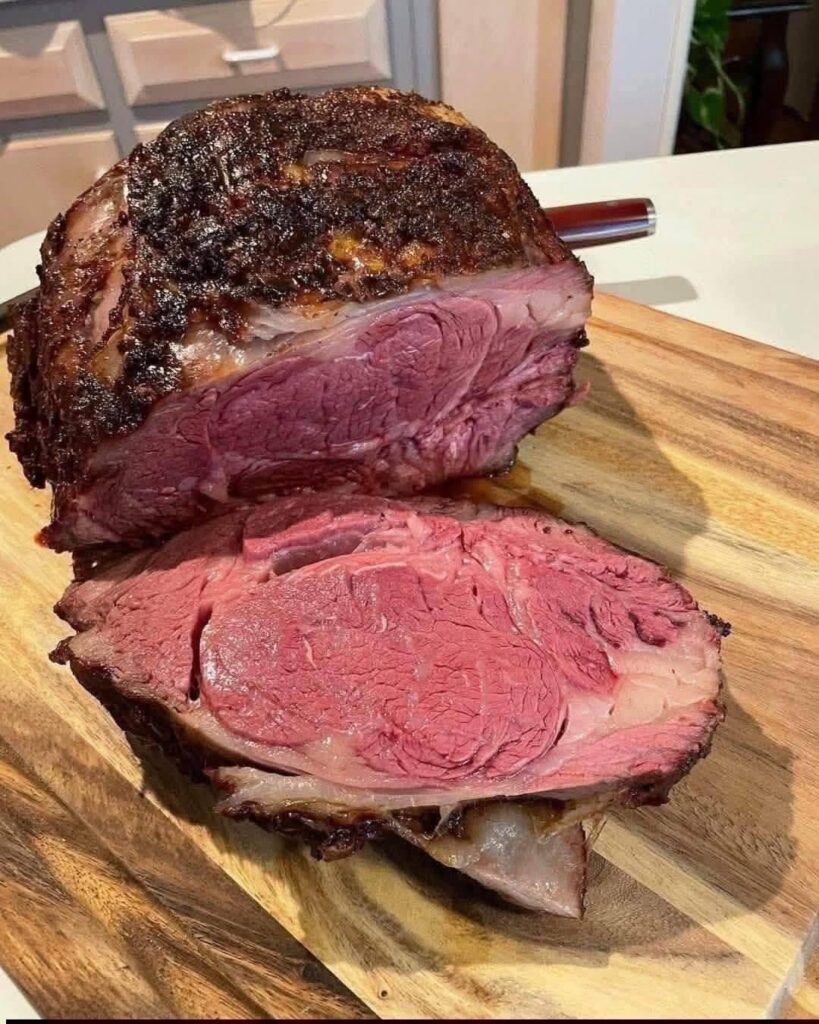
Rare: 120–125°F (final 125–130°F)
Medium-Rare: 125–130°F (final 130–135°F)
Medium: 130–135°F (final 135–140°F)
Medium-Well: 140°F+
Medium-rare is widely considered ideal for prime rib.
Step 4: Resting Is Crucial
Never skip resting. Resting allows juices to redistribute throughout the meat. Cutting too early causes flavorful juices to spill out.
Rest at least 20–30 minutes before carving.
Step 5: Carving Like a Pro
If bone-in:
Slice along the bones to remove them in one piece.
Then slice the roast into ½ to 1-inch thick slices.
Use a long, sharp carving knife for clean cuts.
Serve immediately.
Make the Perfect Au Jus
Prime rib drippings create an incredible sauce.
Ingredients:
Pan drippings
2 cups beef broth
½ cup red wine (optional)
1 teaspoon Worcestershire sauce
Salt and pepper to taste
Skim excess fat from drippings. Place roasting pan over stovetop heat. Add broth and wine, scraping browned bits. Simmer 5–10 minutes. Strain and serve warm.
Creamy Horseradish Sauce
A classic accompaniment.
½ cup sour cream
2 tablespoons prepared horseradish
1 teaspoon Dijon mustard
1 tablespoon lemon juice
Salt and pepper
Mix and chill for 30 minutes before serving.