
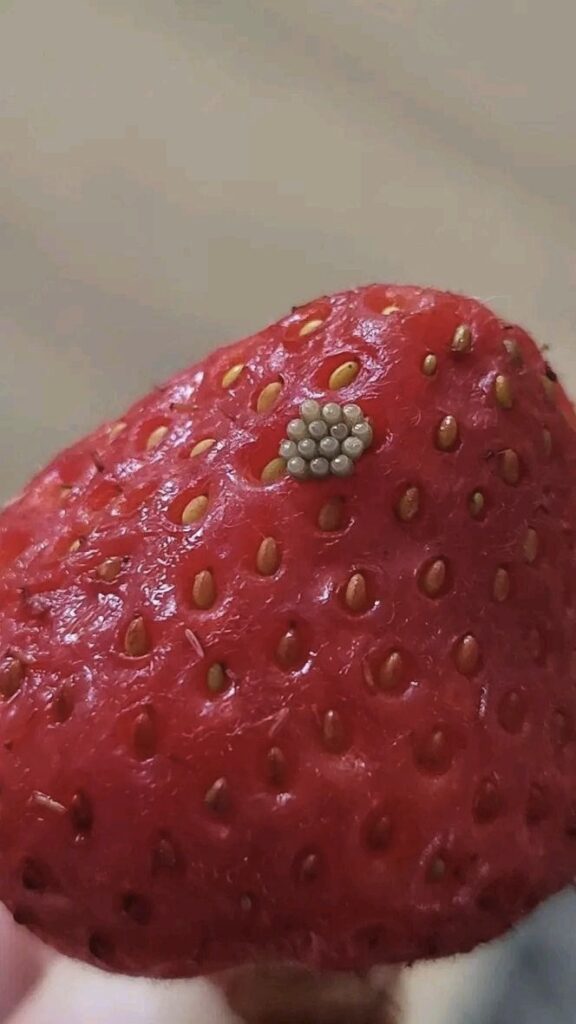

Such formations are not typical of the fruit itself. Strawberry seeds (often mistaken as seeds but actually achenes) are embedded in the outer surface and are yellowish, not clustered like this. Therefore, the presence of these round objects suggests an external factor.
3. Possible Explanation: Insect Eggs
One of the most likely explanations for this phenomenon is that the cluster represents insect eggs. Many insects lay their eggs in small groups on plant surfaces, including fruits. These eggs are often laid in safe environments where the larvae will have immediate access to food once they hatch.
Common insects that may lay eggs on fruits include moths, beetles, and certain types of flies. The eggs are usually small, round or oval, and arranged in clusters for protection. The appearance in the image matches this description.
However, it is important to note that not all insect eggs are harmful to humans. Many are harmless if accidentally ingested, although they are certainly unappetizing and may raise hygiene concerns.
4. Environmental and Agricultural Factors
The presence of such eggs may be linked to farming practices. Strawberries are often grown in open fields or greenhouses, where they are exposed to insects and environmental elements. Even with modern agricultural techniques, it is difficult to completely eliminate insect interaction without the heavy use of pesticides.
Organic farming, in particular, minimizes chemical use, which can increase the likelihood of encountering insects or their eggs. While this is generally considered healthier and more environmentally friendly, it may also require consumers to be more vigilant when washing and inspecting produce.
5. Food Safety Considerations
When encountering unusual formations on food, it is always best to err on the side of caution. Proper washing of fruits and vegetables is essential to remove dirt, bacteria, and possible contaminants. In cases like the one shown in the image, it is advisable not to consume the affected fruit.
If you notice clusters, discoloration, or anything that appears abnormal, it is safer to discard the fruit. Food safety is crucial, and consuming contaminated or questionable produce can pose health risks, even if they are minor.
6. Psychological Reaction and Awareness
Images like this often go viral because they trigger a strong psychological response. Many people feel discomfort or disgust when seeing clustered patterns, a phenomenon sometimes linked to trypophobia. This reaction can amplify concern, even when the actual risk is low.
Nevertheless, such images serve an important purpose: they raise awareness about food inspection and hygiene. They remind consumers to look closely at what they eat and to adopt safe practices in food preparation.
Conclusion
The image of a strawberry with a cluster of small, round objects highlights how even familiar foods can present unexpected surprises. While strawberries are generally safe, nutritious, and enjoyable, external factors such as insect activity can occasionally affect their appearance.
The most plausible explanation for the cluster is that it represents insect eggs, a natural occurrence in agricultural environments. Although not always dangerous, their presence underscores the importance of proper food handling, including washing and visual inspection.
Ultimately, this image is a reminder of the complex interaction between nature, agriculture, and human consumption. By staying informed and attentive, we can continue to enjoy our food safely while appreciating the natural processes behind it.